If you are looking into community dental services in Queensland, the main thing to know is that public oral health care may be available for eligible adults and children, usually through Queensland Health or child dental programs. These services can include urgent dental care, check-ups, preventive care, fillings, extractions and some denture services, depending on eligibility, local availability and clinical need.
For people in Beenleigh, Eagleby, Mount Warren Park, Waterford, Loganholme, Bethania and nearby areas, understanding the difference between public and private dental options can make it easier to plan care without feeling rushed. Public services may be a helpful pathway for eligible patients, while private clinics can offer other appointment choices, treatment planning and services that may not be covered publicly.
What does community dental mean in Queensland?
In Queensland, “community dental” usually refers to publicly funded oral health services delivered through government clinics, school dental services or public hospital and health services. These are different from private dental clinics, where patients usually pay directly, claim through private health insurance or use a payment arrangement if available.
Queensland Health provides information about public dental services in Queensland, including eligibility and how to access care. Eligibility rules can change, so it is worth checking the current government information rather than relying on older advice from friends or online forums.
Community dental services are generally focused on necessary oral health care rather than cosmetic treatment. This means the aim is usually to assess dental disease, manage pain or infection, help prevent future problems and support function.
If you are comparing your choices, Beenleigh Dental has also prepared a guide to public and private dental care in Australia, which explains how the systems differ in practical terms.
Who may be eligible for community dental in Queensland?
Eligibility for community dental care in Queensland depends on factors such as age, residency, concession card status and the specific program being used. A clinical assessment is still needed before any treatment is recommended.
The table below gives a general guide, but Queensland Health or the relevant program provider should confirm your eligibility.
| Group | What may apply | Notes |
|---|---|---|
| Adults with certain concession cards | Public dental services may be available | Current eligibility should be checked with Queensland Health |
| Children and teenagers | School dental services or child dental programs may apply | Age, school year, Medicare status or concession eligibility may matter |
| Children eligible for CDBS | Treatment may be covered up to the program limit | The Child Dental Benefits Schedule has its own rules |
| People with urgent dental needs | Triage may determine priority | Symptoms and clinical risk influence how quickly care is offered |
| Older adults or people with complex needs | Public, private or other support pathways may be considered | Suitability depends on the person’s circumstances |
Because community dental programs are designed for eligible patients, not everyone will qualify for public care. If you are unsure, it is reasonable to contact Queensland Health, check your Medicare or concession details or ask a dental clinic what information you may need before booking.
Adults with concession cards
Adults may be eligible for Queensland public dental services if they meet the current residency and concession requirements. Commonly relevant cards may include certain Centrelink or Department of Veterans’ Affairs concession cards, but the exact rules should be confirmed through Queensland Health.
If you are a senior, concession card holder or supporting an older family member, you may also find it useful to read Beenleigh Dental’s article on affordable dental care options for seniors in Queensland. It outlines public, private and other pathways without assuming one option is suitable for everyone.
Children and teenagers
Children in Queensland may be able to access public dental services through school dental programs or other child oral health pathways. Some children may also be eligible for the Child Dental Benefits Schedule, often called CDBS, which is a Medicare program that helps cover basic dental services for eligible children.
Services Australia provides current information about the Child Dental Benefits Schedule, including eligibility and benefit limits. Not every treatment is covered, and the available balance can change if benefits have already been used.
What services may be provided through QLD public oral health clinics?
A community dental appointment may involve an examination first, because the dental team needs to understand what is happening before discussing treatment options. The care offered will depend on the clinic, the patient’s eligibility, clinical priority and what is considered appropriate for the condition.
Public oral health services may include:
- Dental examinations and oral health advice
- X-rays where clinically indicated
- Preventive care such as fluoride or fissure sealants, if suitable
- Fillings for tooth decay
- Tooth removal where a tooth cannot be maintained or another option is not appropriate
- Basic gum care and cleaning where available
- Denture assessment, repairs or provision in some circumstances
- Referral for more complex care if needed
Not all services are available at every clinic, and waiting times can vary. Cosmetic treatments, elective treatment choices and advanced restorative options may not be available through public services, or may only be considered in limited clinical circumstances.
Private dental clinics may offer a broader range of appointment times and treatment options, but costs, inclusions and suitability should be discussed before treatment begins. For a general overview of what a private clinic may provide, you can read about services available at a general dental clinic.
What may happen when you contact a public dental service?
When you contact a public dental service, you may be asked questions about your age, address, concession status, symptoms and medical history. This helps the service decide whether you appear eligible and whether your situation needs urgent assessment.
For community dental services, triage is common. Triage means patients are prioritised according to clinical need rather than who contacted the service first. Someone with facial swelling, dental trauma or signs of infection may be treated differently from someone seeking a routine check-up.
You may be placed on a waiting list for non-urgent care. Waiting times are not the same everywhere and can change depending on demand, staffing, urgency and the type of treatment required.
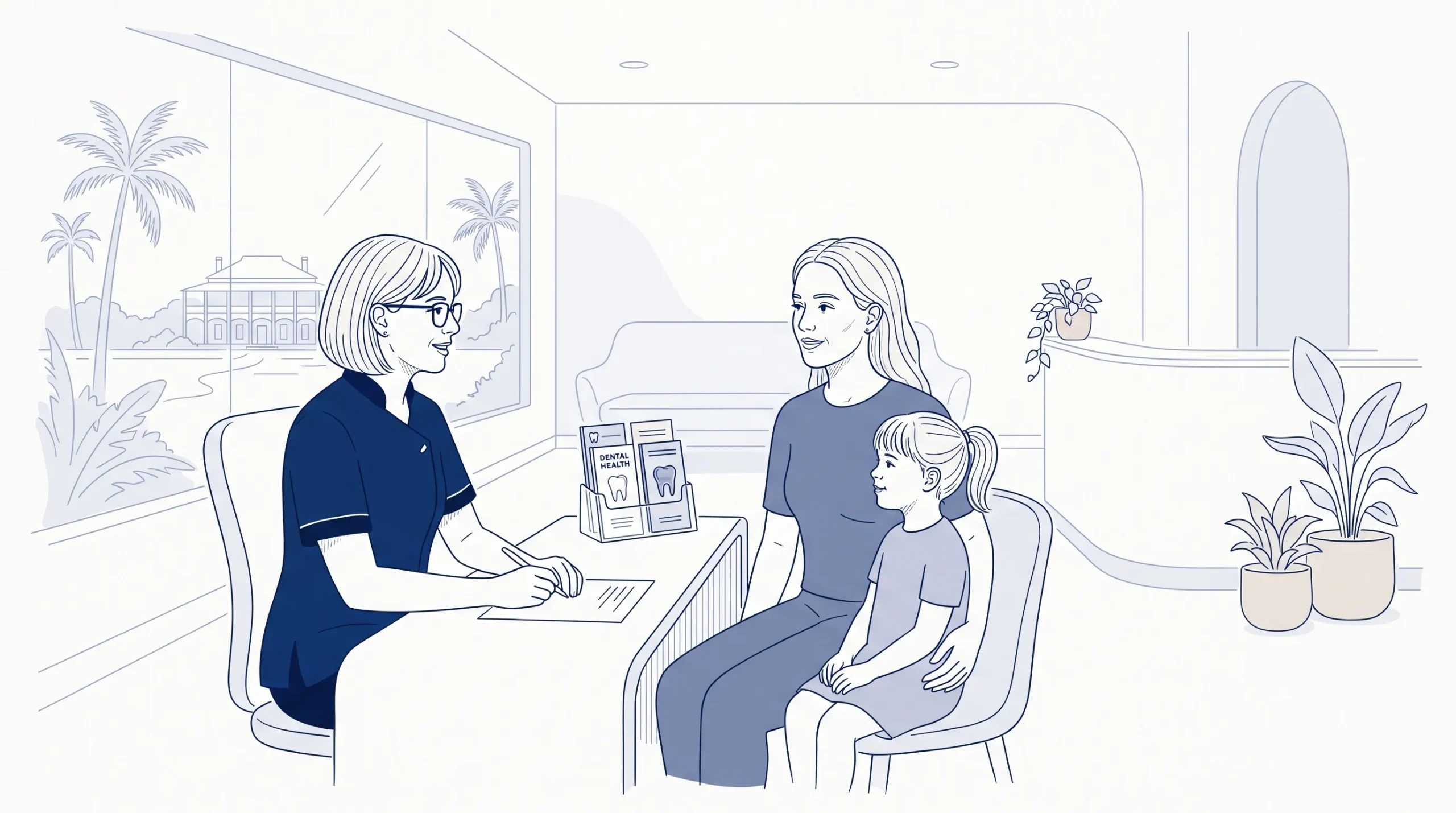
If you are offered an appointment, it is helpful to bring your Medicare card, any concession card, a list of medicines, details of allergies and any relevant dental records if you have them. This can make the appointment smoother and reduce delays in assessing your options.
Public, private and mixed care options
Public dental care and private dental care are not necessarily an either-or decision. Some patients use public services for eligible treatment and see a private dentist for other needs, timing preferences or services not covered publicly.
Community dental may not cover treatments that are mainly cosmetic or elective. For example, clear aligners, whitening, veneers, some implant treatments and other cosmetic services usually require a private consultation, because suitability depends on oral health, bite, gum condition, bone levels, treatment goals and budget.
A private dental consultation can help clarify what is happening in your mouth, even if you later decide to explore public eligibility. Your dentist can explain findings, discuss possible options and outline risks, limitations and alternatives. No dental treatment is suitable for every person, and all procedures have potential benefits and risks.
For people in the Beenleigh and Logan area, access and timing can also matter. Work hours, school commitments, transport and caring responsibilities can all influence whether a public waiting list or a private appointment is more practical.
When should you seek prompt dental advice?
Some dental symptoms are better assessed sooner rather than waiting for a routine appointment. If you are waiting for community dental care but symptoms change, it may be appropriate to contact the service again or speak with a dentist.
Prompt dental advice may be needed if you have:
- Facial swelling, especially if it is spreading
- Fever with dental pain or swelling
- Difficulty swallowing, breathing or opening your mouth
- A knocked-out adult tooth
- Uncontrolled bleeding after dental trauma or treatment
- Severe pain that is not settling with usual measures
- A broken tooth with sharp edges, exposed inner tooth structure or significant sensitivity
If breathing or swallowing is affected, call emergency services or attend an emergency department. Dental infections can sometimes become more serious, particularly for people with certain medical conditions.
Beenleigh Dental offers emergency dental care in Beenleigh, subject to appointment availability and clinical assessment. The most appropriate treatment can only be discussed after a dentist has examined the tooth, gum or surrounding area.
Questions to ask before choosing a dental pathway
Before booking or joining a waitlist, it can help to gather clear information. This is especially useful if you are comparing a public clinic, CDBS, private dental care, health insurance or a payment plan.
Useful questions include:
- Am I eligible for this service or program?
- What identification, cards or documents do I need?
- Is this appointment for assessment only or treatment as well?
- What costs, if any, may apply?
- What treatment is covered and what is not covered?
- How are urgent cases prioritised?
- What happens if I need treatment that the service does not provide?
- Can I receive a written treatment plan or estimate before deciding?
These questions do not commit you to treatment. They simply help you understand your options and make decisions based on accurate information.
Frequently Asked Questions
Is community dental free in Queensland? Some public dental services may be provided at low or no direct cost for eligible patients, but eligibility, fees and covered services should be confirmed with Queensland Health or the relevant program before you rely on this option.
Can I use the Child Dental Benefits Schedule at a private dentist? Some private dental clinics accept CDBS for eligible children, but you should confirm this before booking. The program has limits and does not cover every treatment.
What if I am not eligible for public dental care? You may still be able to see a private dentist, use private health insurance if you have it or ask about payment options. A dental examination can help determine what treatment, if any, may be appropriate.
Does public dental care include cosmetic dentistry? Public dental services usually focus on necessary oral health care. Cosmetic treatments are generally not the focus of public programs and may require a private consultation.
Can Beenleigh Dental confirm my public dental eligibility? A private dental clinic may be able to provide general guidance, but Queensland Health or the relevant government program is the appropriate source for confirming public eligibility.
Considering your dental options in Beenleigh
Community dental services in Queensland may be a suitable pathway for eligible adults and children, particularly for necessary care. Eligibility, waiting times and available treatments vary, so checking current Queensland Health information is a practical first step.
If you would like to discuss a dental concern privately, a dental examination at Beenleigh Dental can help identify possible causes and explain treatment options, including potential benefits, risks, costs and alternatives. You can contact the clinic to arrange an assessment in Beenleigh and decide what feels appropriate for your circumstances.