

If you are looking for a dentist in Australia after moving here, you may be trying to understand a system that feels unfamiliar at first. A good place to start is to check that the practitioner is registered, understand the difference between public and private dental care, ask how fees are explained and choose a clinic you can attend reasonably easily. If you are settling around Beenleigh, Eagleby, Mount Warren Park, Waterford, Loganholme, Bethania or nearby areas, it can also be useful to find a local dental clinic before a problem becomes uncomfortable, so you know who to contact for routine care or urgent advice.
How to choose a dentist in Australia with confidence
Dental care in Australia is provided by registered dental practitioners, including dentists, dental specialists, oral health therapists, dental hygienists and dental prosthetists. Each role has a defined scope of practice. For most new patients, a general dentist is the usual starting point for check-ups, tooth pain, fillings, gum concerns, children’s dental care, cosmetic questions and referrals when more specific care is needed.
Check registration first
Dentists must be registered to practise in Australia. You can search the Ahpra public register to confirm whether a practitioner is registered and whether any conditions are listed. Registration does not tell you whether a particular clinic is the right fit for your needs, but it is a basic safety and professional standard.
Be careful with language that sounds too certain. A trustworthy dentist in Australia should explain what they have found, what options may be available and what the potential risks, benefits and limitations are. They should not guarantee a result or imply that a treatment is suitable for everyone.
Match the clinic to your needs
Think about what you are likely to need over the next year or two. Some people only need routine check-ups and cleans. Others may need children’s dentistry, emergency appointments, dentures, dental implants, clear aligner discussions, cosmetic treatment or help managing dental anxiety.
If you have an ongoing medical condition, take regular medication, are pregnant or have had complex dental treatment overseas, mention this when booking. Your dental and medical history can affect treatment planning, anaesthetic choices, healing and referral decisions.
Understand public and private dental care before you book
Australia has both public and private dental care. New arrivals are often surprised that Medicare does not usually cover routine adult dental treatment in the same way it covers many medical services. Eligibility for public dental services depends on factors such as age, concession status, location and clinical need.
For a fuller overview, Beenleigh Dental has a separate guide to public and private dental care in Australia that explains the system in more detail.
| Option | What it may involve | Points to check |
|---|---|---|
| Public dental services | Government-funded care for eligible patients, often through state or territory services | Eligibility, waiting times, available treatment types and emergency arrangements |
| Private dental clinics | Care paid privately, through private health insurance or through approved payment arrangements | Fees, treatment plans, item numbers, payment options and appointment availability |
| Child dental benefits | Some eligible children can access benefits through the Child Dental Benefits Schedule | Eligibility, remaining benefit balance and services covered |
| Private health insurance extras | Dental rebates may apply depending on the policy | Waiting periods, annual limits, preferred provider rules and out-of-pocket costs |
If you have children, the Child Dental Benefits Schedule through Services Australia may be relevant if they meet eligibility requirements. It is worth checking eligibility directly through official channels because benefits and personal circumstances can change.
What to check when comparing local clinics
When comparing a dentist in Australia, it helps to look beyond the closest clinic on a map. Convenience matters, but so do communication, fee transparency, appointment availability and whether the clinic provides the types of care you may need.
Look for practical signs that the clinic is patient-focused. These may include clear booking processes, written treatment estimates for planned care, time to ask questions and a willingness to discuss alternatives. If treatment is elective, such as cosmetic dentistry or clear aligners, a clinical assessment is needed before suitability can be discussed properly.
Reviews can be useful, but they should be read carefully. A single very positive or very negative review may not tell the whole story. Repeated comments about communication, punctuality, clarity around costs or how children are treated can be more useful than broad praise. This guide on how to read dentist reviews carefully before you book explains what to look for without relying on reviews alone.
Questions to ask before booking
A short phone call or online enquiry can answer many practical questions. You might ask:
- Are new patients currently being accepted?
- What does a new patient appointment usually include?
- Will I receive a treatment plan and fee estimate before starting non-urgent treatment?
- Do you see children, adults and older patients?
- What should I bring if I have overseas dental records or X-rays?
- Are payment plans available for eligible treatment?
- What should I do if I have swelling, trauma or severe tooth pain?
You do not need to ask every question at once. Choose the ones that match your situation and concerns.
What to expect at your first dental visit
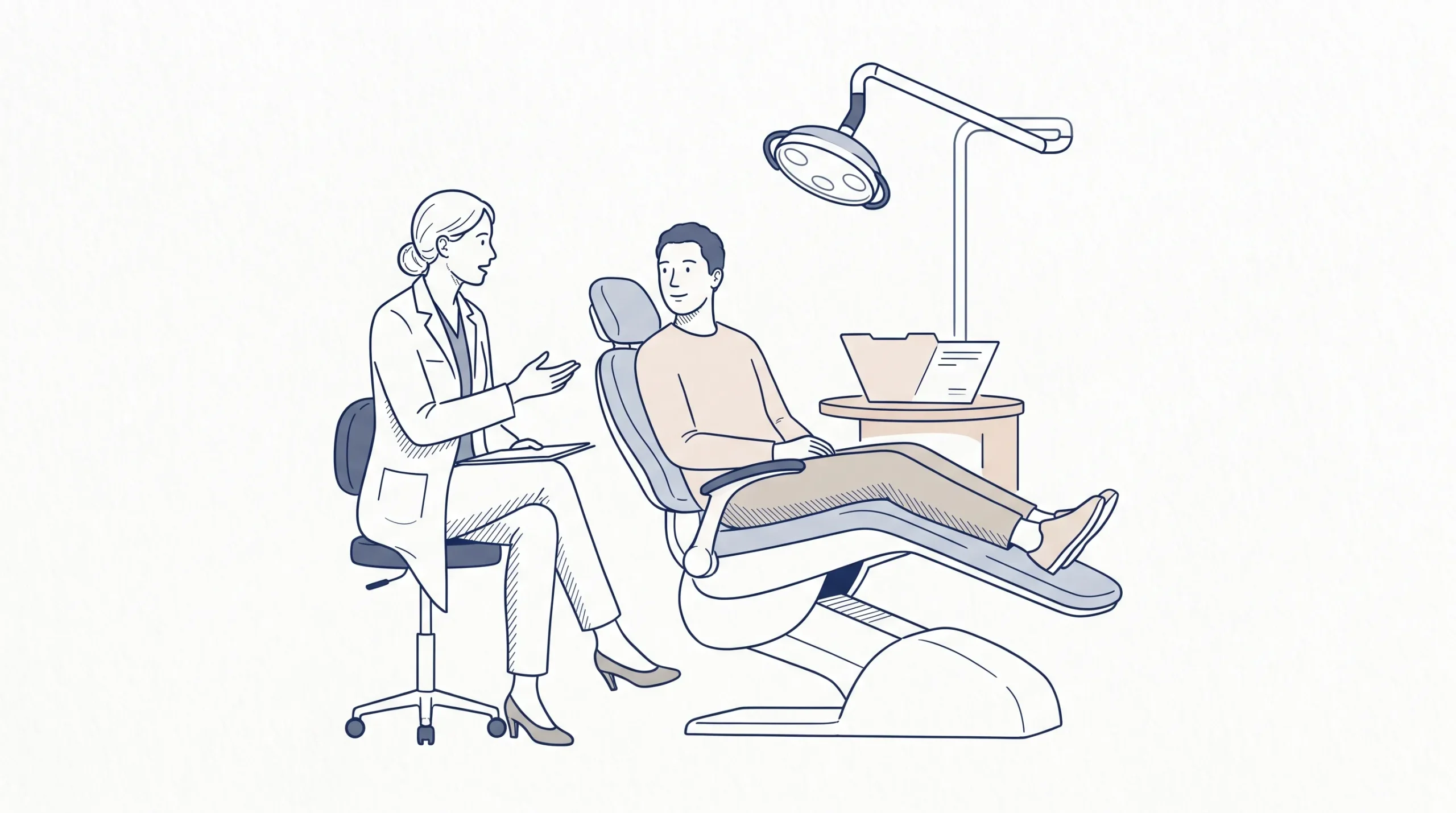
Your first appointment with a dentist in Australia is usually about understanding your oral health, concerns and goals before any treatment decisions are made. The exact appointment may vary depending on your symptoms, the clinic and whether you are attending for a routine examination or an urgent concern.
A new patient visit may include a medical and dental history, discussion of current symptoms, an examination of your teeth and gums and, where appropriate, dental X-rays. X-rays are not required for every person at every visit, but they may be recommended when the dentist needs more information than can be seen during a visual examination.
You can bring:
- A list of medications and allergies
- Your Medicare card, if relevant
- Your private health insurance card, if you have one
- Previous dental X-rays or treatment records, if available
- Details of any current dental appliances, dentures, retainers or aligners
- Questions about costs, options or timing
If you feel nervous, say so early. Many people delay dental care because of anxiety, past experiences or uncertainty about costs. Your dentist can talk through ways to make appointments more manageable. Sedation options may be discussed in some circumstances, but suitability depends on your health, the procedure and clinical assessment.
For a more detailed walk-through, you may find this article on what happens during a new patient dental visit helpful.
Costs, health funds and payment options
Costs with a dentist in Australia can vary because treatment needs, appointment length, materials, X-rays and complexity differ between patients. For example, a routine examination is different from treating an infected tooth, replacing a missing tooth or planning cosmetic work.
Before non-urgent treatment, ask for an estimate that sets out the proposed treatment, likely fees and alternatives where appropriate. If you have private health insurance, you can ask for item numbers so your fund can tell you what may be covered and what you may need to pay yourself. Health fund rebates depend on your policy, waiting periods, annual limits and fund rules.
For larger treatment plans, ask whether the clinic offers staged treatment or payment options. Beenleigh Dental offers payment plans, and suitability for these arrangements may depend on the type of treatment and the payment provider’s terms. It is reasonable to take time to consider non-urgent treatment, ask questions and understand the potential risks and limitations before making a decision.
When dental care should not wait
Some dental problems need prompt professional assessment. This does not mean every toothache is an emergency, but certain symptoms can indicate infection, trauma or a problem that may worsen without care.
Seek dental advice promptly if you have facial swelling, swelling spreading toward the eye or neck, severe dental pain, fever with dental symptoms, bleeding that does not stop, a knocked-out adult tooth, a broken tooth with significant pain or trauma to the mouth or jaw. If breathing or swallowing is affected, seek emergency medical care.
If you are unsure whether your concern can wait, contacting a dental clinic for guidance is sensible. This article on what to do for urgent dental problems outlines common urgent situations and practical first steps before an appointment.
Finding dental care around Beenleigh and the Logan area
For people new to Beenleigh, the Logan area or the northern Gold Coast corridor, location can make a real difference. A clinic that is practical to reach from home, work or school may make it easier to keep up with preventive visits and complete treatment that requires more than one appointment.
You may also want to consider parking, public transport, appointment times, how the clinic communicates treatment plans and whether family members can attend the same practice. If you have children, ask how the clinic approaches first visits and preventive care. If you are looking into cosmetic or restorative options, ask what the assessment process involves and whether alternatives will be discussed.
A suitable dentist in Australia should give you enough information to make an informed choice. That includes explaining when treatment is recommended, when monitoring may be reasonable and when referral to another practitioner may be appropriate.
Red flags to be mindful of
Most dental clinics aim to communicate clearly, but it is still worth being alert to signs that a clinic may not be the right fit for you. These can include pressure to start non-urgent treatment immediately, unclear fees, reluctance to provide a written treatment plan for complex care or promises about results that sound certain.
Be cautious if a provider describes cosmetic treatment as necessary when you do not have a clinical problem, suggests that one treatment is suitable for everyone or dismisses your questions about alternatives. All dental procedures carry potential risks and benefits, and treatment outcomes and experiences vary between patients.
Frequently asked questions
How do I know if a dentist in Australia is registered? You can search the Ahpra public register online. It allows you to check whether a dental practitioner is registered in Australia and whether any conditions are listed.
Can I use Medicare for dental treatment? Medicare does not usually cover routine adult dental treatment. Some children may be eligible for the Child Dental Benefits Schedule, and some adults may be eligible for public dental services depending on their circumstances.
Should I choose a public or private dental clinic? This depends on eligibility, urgency, cost, waiting times and the type of care needed. Public care may be suitable for eligible patients, while private care may offer broader appointment availability and treatment choices.
What if I had dental treatment overseas? Bring any records, X-rays, implant details, aligner information, denture details or treatment notes you have. Even partial information can help your new dentist understand what has been done and what may need review.
Do I need a check-up if nothing hurts? A dental examination may identify early signs of decay, gum disease, tooth wear or other concerns before they become painful. The timing of check-ups varies depending on your oral health and risk factors, so your dentist can suggest an interval based on your needs.
Arranging a dental visit in Beenleigh
If you are settling locally and need a dentist in Australia near Beenleigh, a dental examination can help you understand your oral health, discuss any concerns and consider suitable options. To arrange an assessment, you can book an appointment with Beenleigh Dental or contact the clinic to ask what information to bring to your first visit.