
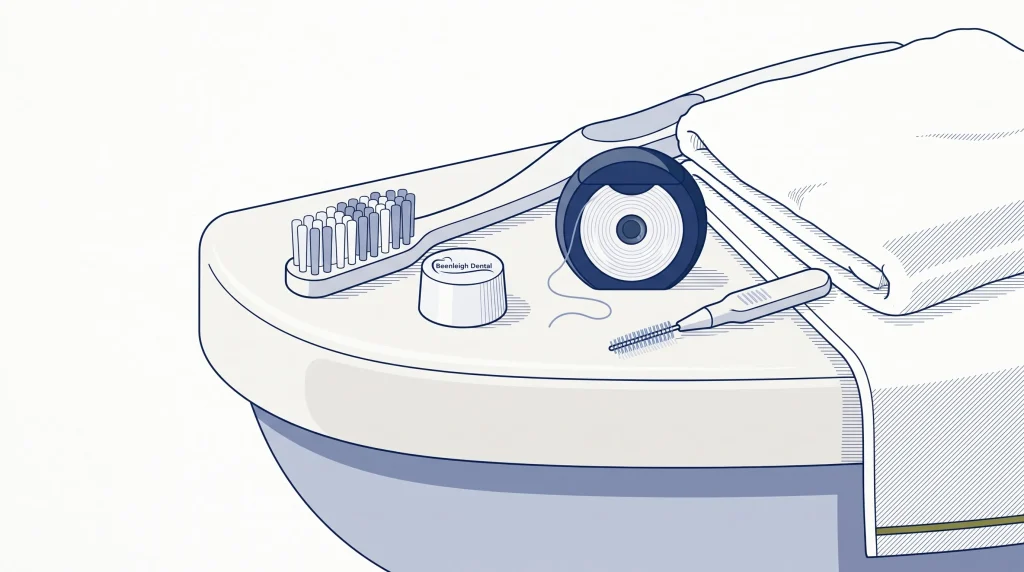
For families looking for Beenleigh oral health tips, the most useful starting point is a manageable daily routine: brush twice a day, clean between teeth, choose water regularly and limit frequent sugary snacks and drinks. Children need age-appropriate toothpaste and help with brushing. Adults may need adjustments for concerns such as bleeding gums, dry mouth or dental appliances.
These habits support oral health, but they do not replace an assessment when something changes or feels uncomfortable.
Make brushing and cleaning between teeth part of the day
Brush for about two minutes, twice a day, using a soft-bristled toothbrush. Clean the outside, inside and chewing surfaces of your teeth, paying attention to the gumline. Gentle, thorough brushing is more useful than scrubbing hard, which can contribute to gum damage and tooth wear.
Adults should generally use fluoride toothpaste. Fluoride helps strengthen tooth enamel, the outer surface of a tooth, and can help protect against decay. After brushing, spit out the excess toothpaste rather than rinsing it away with water. Our explanation of fluoride and tooth decay covers why it is used in preventive care.
Clean between teeth daily with floss or appropriately sized interdental brushes, which are small brushes designed for the spaces between teeth. Your dentist can demonstrate a technique suited to your teeth, bridges or other dental work.
The Healthdirect guide to teeth cleaning provides further practical advice. If your routine feels difficult, ask for a demonstration rather than buying several new products at once.
Beenleigh oral health tips for children
Start brushing as soon as the first tooth appears, using a small, soft toothbrush. Australian advice generally recommends brushing with water before 18 months of age, unless a dental professional recommends otherwise.
From 18 months to six years, use a small, pea-sized amount of low-fluoride children’s toothpaste, unless your dentist advises a different approach based on decay risk. From six years, standard fluoride toothpaste is generally recommended. Encourage children to spit out toothpaste rather than swallow it, and keep the tube out of reach.
Young children need an adult to brush their teeth or finish the job. Many still need help until around eight years of age, sometimes longer depending on their dexterity. Letting a child have a turn first can encourage participation without leaving the cleaning entirely to them.
Aim for the first dental visit when the first tooth appears or by the first birthday. Baby teeth matter for eating, speech development and holding space for adult teeth, so concerns should not be dismissed because those teeth will eventually fall out.
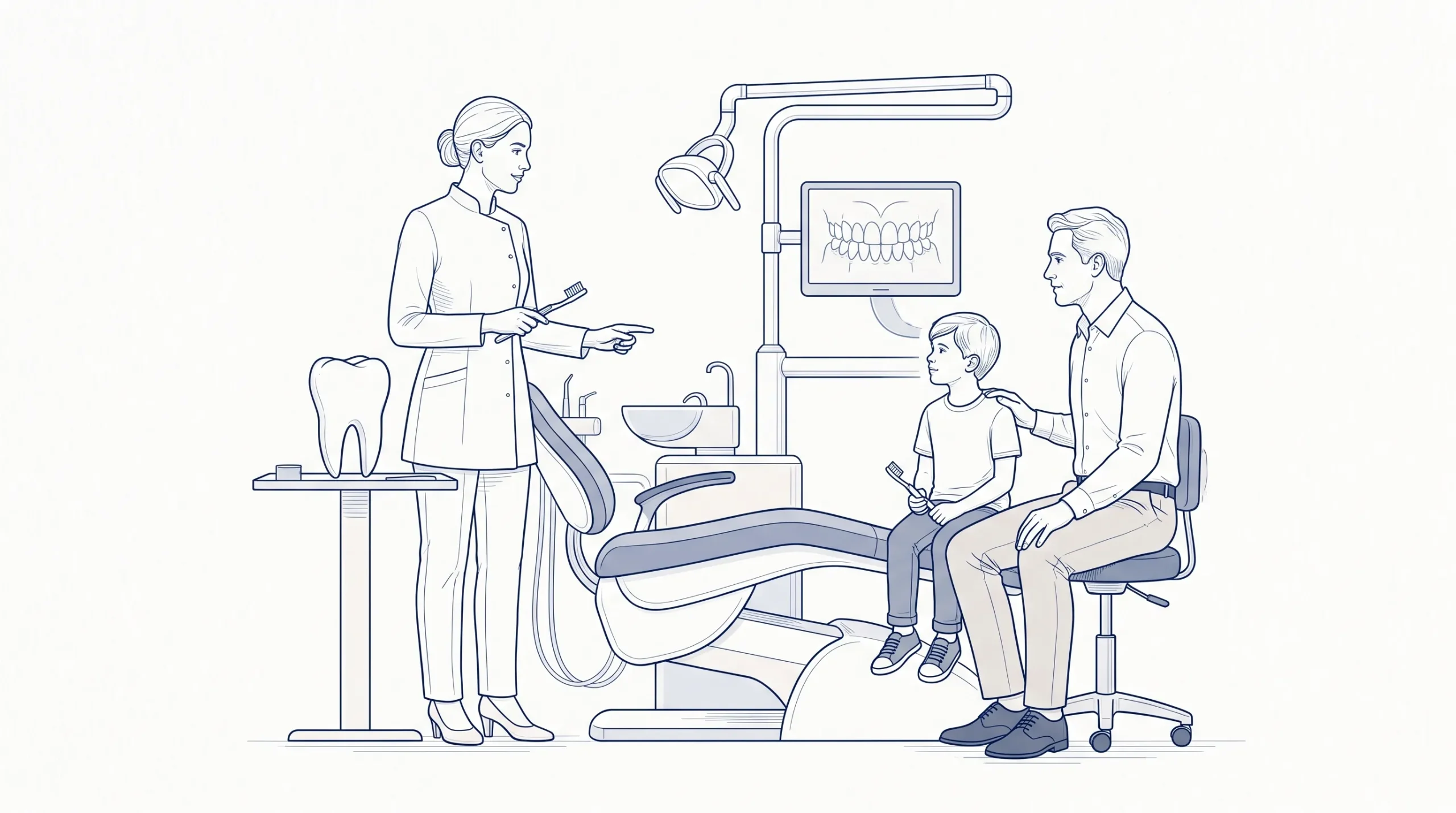
For children who are unsure about appointments, preparing for dental check-ups with simple explanations and familiar routines may make the visit feel more predictable.
Look at how often teeth are exposed to sugar
A practical Beenleigh oral health routine needs to fit around school, work and sport. Keeping water available and planning snacks can help reduce repeated exposure to sugar during a busy day.
Bacteria in dental plaque, the sticky film that collects on teeth, use sugars to produce acids. Repeated acid exposure can gradually damage enamel. Sipping a sweetened drink over several hours creates repeated exposures, even if the total amount seems small.
Consider these everyday changes:
- Make water the usual drink: Keep a refillable bottle available rather than regularly sipping juice, soft drinks or sweetened tea and coffee.
- Keep sugary foods to mealtimes where practical: Frequent grazing gives teeth less time between acid exposures.
- Check sports drinks and flavoured drinks: Some contain both sugar and acids that can affect teeth. Sugar-free soft drinks can still be acidic.
Options such as plain yoghurt, cheese and age-appropriate vegetables can add variety to snacks. For babies, avoid putting them to bed with a bottle containing milk, formula or juice, as prolonged contact can increase decay risk.
Adjust the routine for bleeding gums and dry mouth
Beenleigh oral health advice should also account for symptoms and medical circumstances, rather than assuming the same products suit everyone.
Gums that bleed during brushing or cleaning between teeth may be inflamed. Continue gentle cleaning rather than avoiding the area, and arrange a dental assessment if bleeding persists, recurs or comes with swelling, discomfort or bad breath. Bleeding alone cannot tell you the cause.
A persistently dry mouth also deserves attention. Saliva helps protect teeth and keep the mouth comfortable. Some medicines and health conditions can reduce saliva, increasing the risk of decay and irritation. Do not stop prescribed medicine without speaking with your prescriber.
Regular sips of water may help with comfort. Sugar-free chewing gum can stimulate saliva for adults who can chew it safely, but ongoing dryness needs assessment. Your dentist may discuss additional preventive care depending on the cause and your level of risk.
If you wear dentures, clean them daily and follow advice about removing them overnight. Sore areas or changes in fit should be checked rather than managed by adjusting the denture yourself.
Protect teeth during sport and respond to changes
For children and adults playing contact or collision sports, an appropriately fitted mouthguard can help reduce the risk of dental injury. A dentist can assess the fit and discuss suitable options. Children’s mouthguards need checking as teeth erupt and their mouths grow.
If a tooth is knocked out, seek immediate dental advice because management differs for baby and adult teeth. Do not put a knocked-out baby tooth back into its socket.
Arrange prompt dental assessment for persistent toothache, a broken tooth, new swelling or a mouth ulcer that has not healed within two weeks. Facial swelling with difficulty breathing or swallowing requires emergency medical care; call 000.
Use dental visits to plan care, not just respond to pain
Professional Beenleigh oral health care can help identify problems that are difficult to see at home. Early decay and gum disease do not always cause pain, so comfort alone is not a reliable guide to whether an examination is needed.
An appointment may involve discussing symptoms, medicines and medical history, then checking the teeth, gums and soft tissues of the mouth. X-rays may be recommended when clinically justified, rather than automatically at every visit.
How often you need a check-up depends on your circumstances. Your dentist should consider previous decay, gum health, dry mouth and other risk factors when recommending a review interval.
If treatment is suggested, ask what was found, whether monitoring is reasonable and what the benefits, risks and alternatives are. Depending on the problem, options may include changes to home care, professional cleaning or restorative treatment such as a filling. Procedures carry potential risks, and suitability and outcomes vary between patients.
Discuss costs and available support early
Cost is a reasonable part of a Beenleigh oral health discussion. If money is a concern, ask which care is necessary now, what can safely be monitored and whether treatment can be planned in stages.
Medicare generally does not cover routine dental care for adults. The Child Dental Benefits Schedule helps cover certain basic dental services for eligible children and teenagers, subject to its rules and benefit limits. Check eligibility, remaining benefits and any out-of-pocket costs before treatment.
Eligible Queensland residents may also be able to access Queensland public dental services. Access depends on eligibility and clinical need, and waiting lists may apply. Public dental services assess their own eligibility requirements.
When comparing private care, request an itemised estimate and ask what follow-up is included. Our guide to comparing affordable dental care options explains questions worth asking beyond the headline price.
Beenleigh Dental offers payment plans. Ask about applicable terms and any fees before deciding whether a plan suits your circumstances.
Frequently asked questions
Is an electric toothbrush necessary? No. Both manual and electric toothbrushes can clean effectively when used correctly. An electric brush may make brushing easier for some people, particularly those with limited hand movement. Technique and regular use still matter.
Can mouthwash replace brushing or flossing? No. Mouthwash does not replace physically removing plaque with brushing and cleaning between teeth. Some rinses have a specific role, but your dentist can advise whether one is useful for you. Young children should not use mouthwash unless a dental professional recommends it.
What if I have not seen a dentist for several years? You can explain that when arranging an appointment. The first step is understanding your current oral health and priorities, not assuming that extensive treatment is needed. Mention any anxiety, symptoms or budget concerns so these can be considered during the discussion.
Discuss your family’s oral health needs
To discuss brushing difficulties, symptoms or preventive care, you can arrange an appointment with Beenleigh Dental. The clinic provides children’s, general and emergency dental care in Beenleigh. An examination can help determine which advice or treatment options may be appropriate for your individual circumstances.