
If you are missing one tooth, several teeth or a full arch of teeth, the choice between dentures and implants can feel confusing. If you have searched for “denture doctors near me”, you are probably trying to work out who can assess your mouth, explain your options and help you decide what may suit your needs.
The short answer is that dentures and dental implants can both replace missing teeth, but they work very differently. Dentures are removable appliances that sit over the gums or attach around remaining teeth. Implants are small fixtures placed in the jawbone to support a crown, bridge or denture. The most suitable option depends on your oral health, bone levels, medical history, budget, time frame and personal preferences.
Denture consultation in Beenleigh
For people around Beenleigh, Eagleby, Mount Warren Park, Waterford, Loganholme and Bethania, Beenleigh Dental can provide an assessment and discuss options such as dentures, dental implants and other restorative treatments. A clinical appointment is needed before any recommendation can be made, as treatment suitability varies between patients.
If your missing tooth is related to recent trauma, swelling, severe pain or a spreading infection, it may need more prompt assessment. The Beenleigh Dental guide on urgent dental problems explains symptoms that may require same-day dental care or emergency medical attention.
What dentures involve
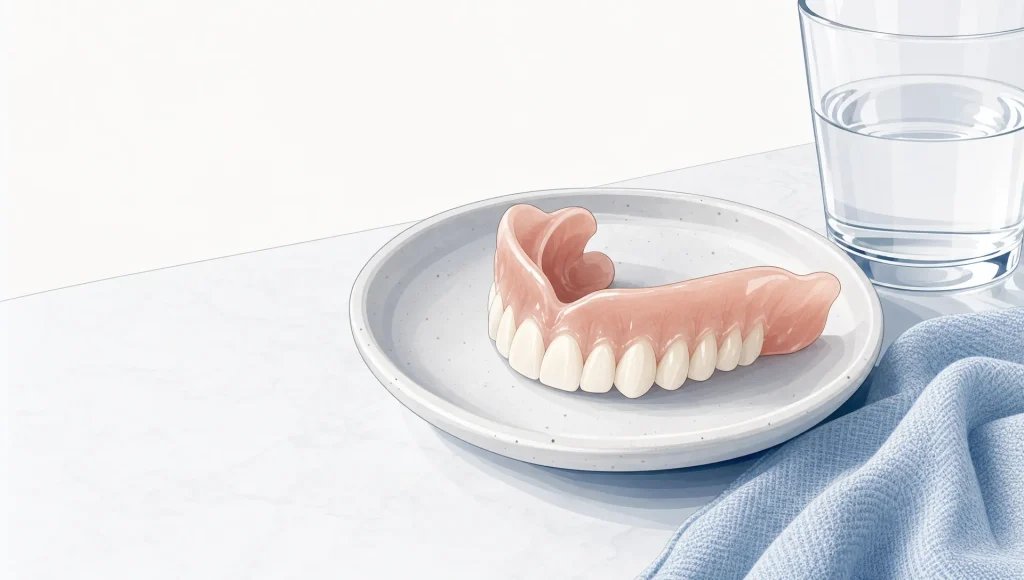
Dentures are removable replacements for missing teeth. They may replace all teeth in an upper or lower jaw, which is called a full denture. They may also replace only some teeth, which is called a partial denture.
A denture usually has artificial teeth attached to a base that rests on the gums. Partial dentures may also use clasps or other components to gain support from remaining teeth. Dentures are custom-made to fit your mouth, but they may need adjustments as the gums and jaw shape change over time.
Dentures may be considered when:
- Several teeth are missing
- A patient wants a removable option
- Implant surgery is not suitable or not preferred
- A more staged approach is needed
- Existing teeth, gums or bone levels limit other options
Possible benefits of dentures include that they can replace multiple teeth and do not usually require surgical implant placement. They may also be suitable for people who want a removable appliance or who have health factors that make surgery less appropriate.
There are also limitations. Dentures can feel different from natural teeth, especially while you are adjusting. They may move during eating or speaking, depending on the fit, saliva, jaw shape and whether remaining teeth are available for support. Some people need relines, repairs or replacement over time as their mouth changes.
The Australian Dental Association’s patient website, Teeth.org.au, provides general information about dentures, including how they are used and cared for.
What dental implants involve
A dental implant is a small fixture, usually made from titanium or another biocompatible material, placed into the jawbone. Over time, the bone can integrate with the implant surface. This process is known as osseointegration.
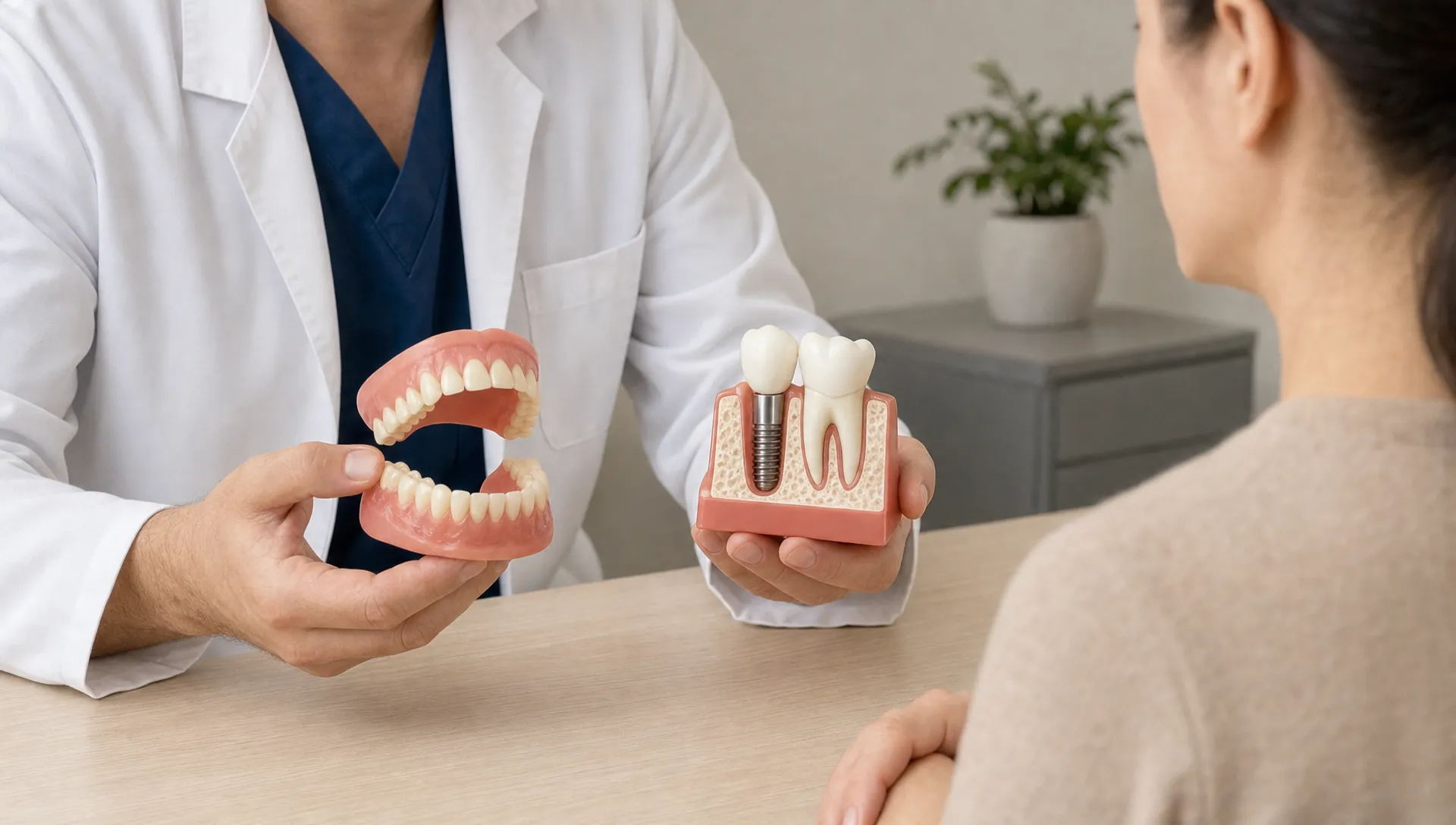
Once the implant is stable, it can support a crown, bridge or denture. For one missing tooth, an implant crown may be considered. For several missing teeth, implants may support a bridge or help retain a denture. In some cases, implants can make a denture feel more secure, but this depends on the number and position of implants, bone levels and the treatment design.
Implants may be considered when:
- There is enough healthy bone or bone can be managed appropriately
- Gum health is suitable
- Medical history does not make implant surgery unsuitable
- The patient is comfortable with a surgical component
- A fixed or more stable replacement option is preferred
Implants also have limitations and risks. Surgery may involve discomfort, swelling, bleeding, infection, delayed healing or implant failure. Long-term care is still important, as inflammation around implants can occur. Implants do not decay, but the gum and bone around them still need regular maintenance.
The Australian Dental Association has general patient information on dental implants, including what they are and why careful assessment is important.
Dentures vs implants: a practical comparison
Neither option is automatically better for every person. The right choice depends on your mouth, health and priorities. This comparison can help you prepare for a discussion with your dentist.
| Factor | Dentures | Dental implants |
|---|---|---|
| How they work | Removable appliance that sits on gums or attaches around teeth | Fixture placed in jawbone to support a crown, bridge or denture |
| Surgical step | Usually no implant surgery required | Requires surgical placement of the implant fixture |
| Stability | Can vary depending on fit, saliva, jaw shape and remaining teeth | Can provide stable support when suitable and properly maintained |
| Time frame | Often shorter than implant-based treatment, depending on the case | Often involves planning, placement, healing and restoration stages |
| Maintenance | Removed for cleaning, may need relines or repairs | Cleaned in the mouth, with regular professional maintenance needed |
| Initial cost | Often lower initially | Often higher initially due to surgery, components and restoration |
| Suitability | May suit many patterns of tooth loss, including full arch tooth loss | Depends on bone, gum health, medical history and treatment goals |
| Feel and function | Can take time to adjust to | May feel more secure for some patients, but experiences vary |
Cost is often part of the decision, but it should not be the only factor. A treatment that appears less expensive at the start may have different maintenance needs over time. A treatment with higher upfront costs may still not be appropriate if the gums, bone or medical factors are not suitable.
When dentures may be the more suitable option
Dentures may be a reasonable option when several teeth are missing, when remaining teeth are not suitable to support a fixed bridge or when implant treatment is not preferred. They may also be useful when a patient wants to avoid surgery or needs a replacement option after multiple extractions.
Some people choose dentures as a long-term solution. Others use them as part of a staged treatment plan, particularly if they need time to consider other options or if healing is needed before a final decision.
A dentist may discuss denture materials, how the denture will be held in place, whether any remaining teeth need treatment first and how the denture may affect eating and speech during the adjustment period.
It is common for new dentures to need review appointments. Small pressure areas can develop as the mouth adapts. Adjustments may improve comfort, but outcomes vary and some people need more time than others to get used to wearing dentures.
When implants may be considered
Dental implants may be considered when a patient wants a fixed tooth replacement or a more stable way to support a denture. They may be suitable for replacing one tooth, several teeth or supporting larger restorations.
Before recommending implants, a dentist usually needs to assess:
- Gum health and oral hygiene
- Jawbone height, width and quality
- The position of nerves, sinuses and neighbouring teeth
- Bite forces and habits such as grinding
- Smoking history
- Medical conditions and medications
- Previous dental infections or tooth loss patterns
Some patients need extra treatment before implants can be considered, such as gum care, tooth removal, bone grafting or management of infection. These steps are not needed for everyone, and your dentist can explain what applies to your situation.
Implant treatment also requires ongoing care. Regular dental reviews and good cleaning habits help monitor the tissues around implants. This does not guarantee success, but it supports better long-term maintenance.
What about bridges and implant-retained dentures?
Dentures and implants are not the only options for missing teeth. In some cases, a dental bridge may be considered. A bridge uses nearby teeth or implants to support one or more replacement teeth. Traditional bridges can be useful in selected cases, but they may require shaping the supporting teeth, which is an important consideration.
Implant-retained dentures sit somewhere between removable dentures and fixed implant restorations. They are still removable, but they attach to implants for added support. Some people find this design more stable than a conventional full denture, although suitability depends on the mouth, number of implants, available bone and planned design.
A dentist can compare these options after examining your mouth. If you are also weighing up public and private pathways for dental care, Beenleigh Dental’s article on dental care in Australia explains how the systems differ and why eligibility, timing and treatment availability can vary.
What an appointment may involve
A missing teeth consultation usually begins with a discussion about what has happened, how long the teeth have been missing and what you would like to achieve from treatment. Your dentist may ask about eating, speech, denture history, dental anxiety, medical conditions, medications and previous dental treatment.
The clinical assessment may include checking your teeth, gums, bite and jaw. X-rays or scans may be recommended if your dentist needs to assess bone levels, tooth roots or implant suitability. If more complex treatment is being considered, you may need a staged plan rather than a single appointment decision.
Your dentist may discuss:
- Whether dentures, implants, bridges or no immediate replacement are options
- The likely steps involved for each option
- Potential benefits, risks and limitations
- Maintenance needs and review appointments
- Approximate time frames and cost factors
- Whether payment plans may be available for suitable treatment
If dental anxiety is a concern, it is reasonable to mention this early. Beenleigh Dental offers sleep dentistry sedation, and your dentist can discuss whether it may be appropriate for your needs and medical history.
For families supporting an older parent or relative with missing teeth, it may also help to read about oral health services at different life stages, as treatment needs can change with age, medical conditions and independence with daily cleaning.
Questions to ask before choosing dentures or implants
It can be useful to take questions to your appointment, especially if you are comparing several options. Consider asking:
- What are the realistic options for my mouth?
- What are the benefits and limitations of each option?
- Am I suitable for implant treatment, and if not, why?
- Would a full or partial denture be more appropriate?
- Are there teeth or gum problems that need treatment first?
- How long might each option take?
- What maintenance will I need at home?
- What follow-up appointments are likely?
- What are the cost factors, and are payment plans available?
A good treatment discussion should give you enough information to make an informed decision without feeling pressured. You can also ask for time to consider the options, particularly if the treatment is complex or involves surgery.
Caring for dentures and implants after treatment
Dentures and implants both need ongoing care, but the routines are different.
Dentures should usually be cleaned daily and removed as advised by your dentist. Your gums, tongue and any remaining teeth still need attention, even if you wear a full denture. If a denture becomes loose, cracked or uncomfortable, avoid trying to adjust it yourself, as this can damage the appliance or irritate the mouth.
Implants need careful cleaning around the gumline and restoration. Your dentist or hygienist may recommend specific brushes, floss or interdental aids. Regular dental reviews allow the team to check the implant restoration, gum health and bite forces.
Missing teeth can also affect the way remaining teeth share biting pressure. Even if you decide not to replace a tooth immediately, dental monitoring may still be worthwhile so your dentist can check for shifting, wear or gum changes.
Frequently asked questions
Are dentures or implants better for missing teeth? There is no single better option for every patient. Dentures may suit some people because they are removable and usually do not require implant surgery. Implants may suit others when the bone, gums and medical history are appropriate. A dental assessment is needed before comparing options for your mouth.
Can I get implants if I already wear dentures? Some denture wearers may be suitable for implants or implant-retained dentures, but this depends on bone levels, gum health, medical history and the design of the existing denture. Your dentist may recommend X-rays or scans to assess this properly.
Are dentures cheaper than implants? Dentures often have a lower initial cost than implant treatment, but total costs depend on the number of teeth being replaced, materials, appointments, maintenance and whether extra treatment is needed. Your dentist can provide a personalised estimate after assessment.
Will dentures feel natural straight away? Dentures often take time to adjust to. Speech, chewing and comfort can feel different at first. Review appointments may be needed to adjust pressure spots or improve fit. Experiences vary between patients.
Do dental implants last forever? Dental implants are designed as a long-term treatment, but they are not guaranteed to last forever. Complications can occur, and ongoing home care and dental reviews are important for monitoring the implant, gum and surrounding bone.
Who should I see if I searched for denture doctors near me? A dentist can assess your missing teeth, oral health and suitability for dentures, implants or other options. If you are in or near Beenleigh, you can arrange an appointment with Beenleigh Dental for an individual assessment.
Discussing your options in Beenleigh
Dentures and implants can both be considered for missing teeth, but the right choice depends on your individual circumstances. A dental examination can help identify the cause of tooth loss, the condition of your remaining teeth and gums, and which replacement options may be appropriate.
To discuss dentures, implants or other restorative options, you can book an appointment with Beenleigh Dental in Beenleigh. Your dentist can explain the potential benefits, risks, limitations and alternatives so you can make an informed decision about your care.