

A first dental appointment usually starts with discussing your concerns and assessing your oral health. X-rays, cleaning or other procedures may be recommended, but they are not automatically part of every visit.
Whether you are changing dentists or returning after a long break, you can ask what is planned before anything begins. This guide explains the usual process, what you may feel and which decisions you can discuss with your dentist.
Your reason for booking helps shape the appointment
A first visit is not necessarily the same as a routine check-up. When you book, explain what you would like assessed rather than simply requesting a first appointment. This helps the team understand your priorities and arrange an appropriate appointment.
| Reason for your visit | What the appointment may focus on |
|---|---|
| You want an overall oral health assessment | Reviewing your history and examining your teeth, gums and other tissues in your mouth |
| You have pain, swelling or a broken tooth | Investigating the immediate concern and discussing appropriate care |
| You want to discuss a treatment option | Assessing the relevant area and explaining suitability, alternatives and any further investigations needed |
If you book because of one painful tooth, a broader examination may need to happen separately. Likewise, a consultation about appearance does not mean you need to proceed with cosmetic treatment.
Ask whether the booking is for an assessment only and whether time has been allocated for any other care.
Before your visit: confirm the practical details
You do not need to make your teeth look different before an appointment. Brush as you normally would and bring information that helps the dentist understand your health.
Useful details include:
- A current medication list, including supplements, and any known allergies.
- Relevant medical conditions, previous operations and pregnancy information where applicable.
- Previous dental records or X-rays, if available, and the details of your former clinic.
- Notes about symptoms, including when they started and what seems to trigger them.
You can ask your previous practice to transfer relevant records. Existing X-rays may be useful, although your dentist will need to decide whether they provide enough current information.
For an ordinary examination, fasting is not usually required. If sedation or another procedure is planned, follow the specific instructions provided by the treating team. Do not stop prescribed medication unless the appropriate clinician advises you to do so.
Before attending, confirm the expected appointment fee and ask whether investigations or treatment would involve additional charges. If you have private health insurance, check your cover with your insurer rather than assuming everything is included.
The first conversation: explain what matters to you
Your dentist will usually ask about your medical and dental history, current symptoms and what you hope to get from the visit. Health conditions and medicines can influence dental care, so information that seems unrelated may still be useful.
You can also mention practical concerns. Perhaps you find it difficult to lie back, have a strong gag reflex, need communication support or feel worried about an injection. Raising these points early gives the team an opportunity to discuss suitable adjustments.
If it has been years since your last visit, you can say that plainly. You do not need to apologise or give a detailed explanation. The useful starting point is your current health and what you would like assessed.
Before the examination begins, ask the dentist to explain the next step if that would make you more comfortable.
What the examination may feel like
A dental examination commonly involves a small mirror, a bright light and instruments used to check teeth and gums. You may be asked to open your mouth, move your tongue or bite together so the dentist can assess different areas.
The dentist may check for decay, problems with existing fillings, gum inflammation and changes in the soft tissues of your mouth. Where appropriate, they may measure the spaces between your teeth and gums to assess gum health.
You might notice gentle pressure or brief sensitivity, particularly around an already sore area. Inflamed gums can sometimes bleed during assessment. Let the dentist know if anything hurts rather than assuming you need to tolerate it.
You can agree on a signal, such as raising your hand, so the dentist knows you need a pause and can stop safely.
Will you need X-rays, a clean or treatment?
An examination does not automatically mean you need every available test or procedure. Your dentist should explain why a recommendation is relevant to your circumstances.
Dental X-rays can show areas that cannot be assessed fully by looking in the mouth, such as between teeth or around tooth roots. They use ionising radiation, so there should be a clinical reason for taking them. Tell the dentist about recent images and if you are pregnant or may be pregnant so they can assess what is appropriate.
A professional clean may be recommended to remove deposits from teeth, but it may not happen during the first visit. The timing and type of cleaning depend on your gum health, the assessment findings and the appointment arrangements.
Treatment for a painful or damaged tooth may sometimes be discussed during the same appointment. Whether it can proceed depends on the diagnosis, available time, your health and your consent. Some concerns need further investigation or a separate appointment.
The Australian Dental Association’s Teeth.org.au oral health resources provide additional patient information about dental care and prevention.
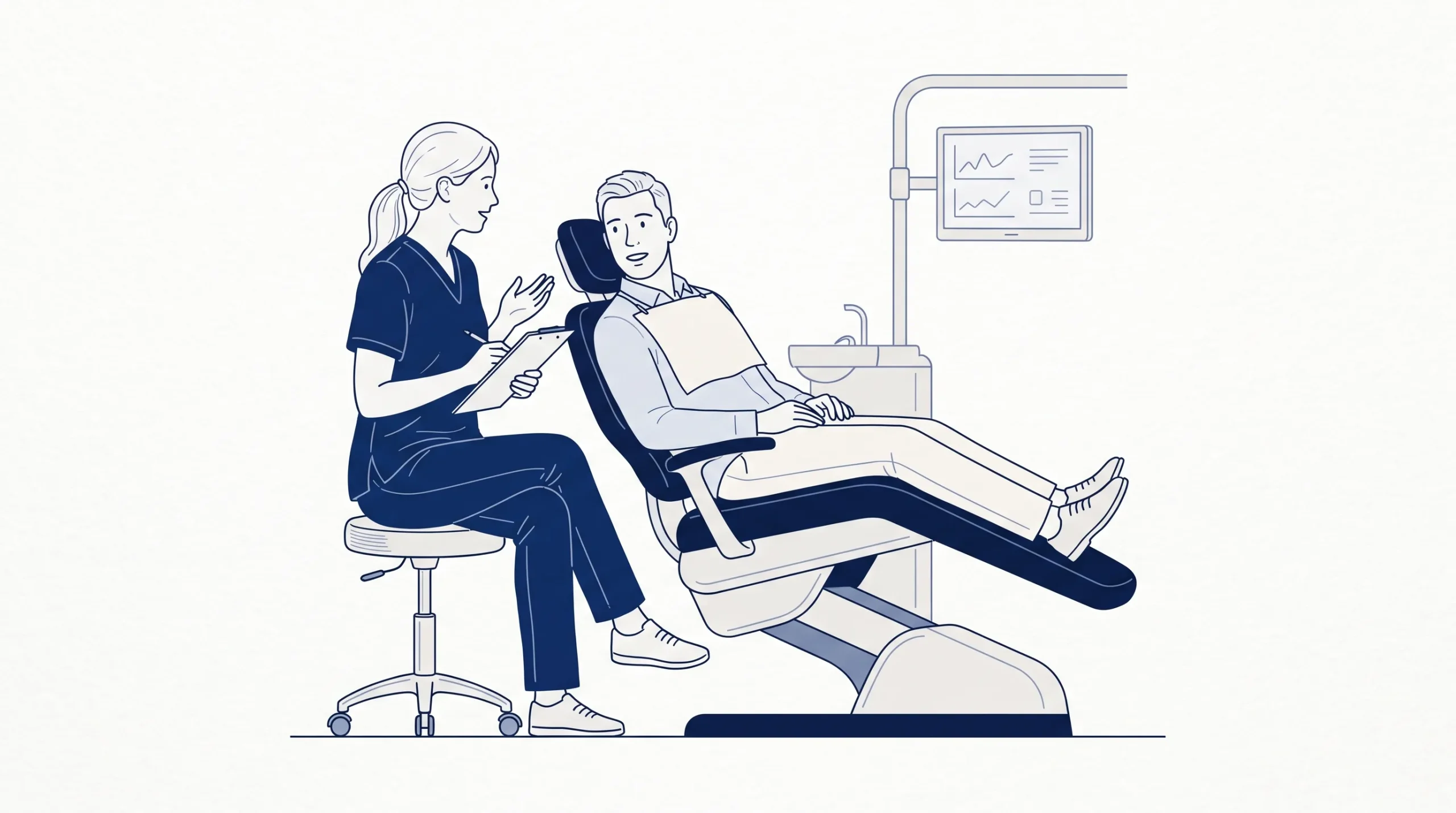
If you feel anxious, discuss comfort before treatment
Knowing the sequence of an appointment can help, but some people need additional support. Tell the team when booking if dental anxiety could affect your visit, rather than waiting until you are in the chair.
You can ask whether explanations before each step, short pauses or changes to positioning may be possible. If you would like a support person present, check the arrangements with the clinic beforehand.
An injection is not generally needed just to examine your teeth. If a procedure requires local anaesthetic, which temporarily numbs an area, the dentist should explain why it is recommended and what sensations you may notice.
Beenleigh Dental offers sleep dentistry sedation. Sedation is not necessary for everyone and requires a suitability assessment, discussion of risks and specific preparation. It should not be assumed to be part of a first appointment.
Understanding the findings without committing straight away
After the assessment, the dentist should explain what they found in language you understand. A useful discussion separates concerns needing prompt attention from preventive advice, matters that can be monitored and optional treatment.
Before agreeing to a procedure, you can ask about its purpose, likely benefits, risks, alternatives and costs. Depending on the situation, monitoring or choosing not to proceed may also be options. Ask what those choices could mean for your oral health.
This discussion supports informed consent. The Australian Commission on Safety and Quality in Health Care explains that informed consent involves understanding the proposed care and making a voluntary decision.
If several treatments are suggested, ask whether you can receive a written plan showing priorities and estimated costs. Procedures carry different risks and benefits, and experiences vary between patients. You can request clarification or another opinion before deciding, while also asking whether delaying care has any clinical implications.
When symptoms should change your booking
Tell the clinic when booking if you have significant tooth pain, swelling, an injury or bleeding that is not settling. These concerns may need a different appointment from a general first check-up.
Seek urgent medical care for difficulty swallowing, rapidly increasing facial or neck swelling, or signs that you are seriously unwell. Call 000 if you are having difficulty breathing. Do not wait for a routine dental appointment in these circumstances.
Frequently asked questions
How long does a first dental appointment take? The time varies according to your concerns and what is booked. An examination, a focused pain assessment and a treatment consultation can require different amounts of time. Ask the clinic when arranging your visit.
Will I have treatment at my first appointment? Not necessarily. The visit may involve assessment and planning only. If treatment is recommended, the dentist should discuss the reasons, alternatives, risks and costs before you decide whether to proceed.
Can I ask for an assessment without a clean? Yes, you can explain your preference when booking. Your dentist can assess your oral health and discuss whether cleaning is recommended, including the implications of postponing it.
What if I have never been to a dentist before? Tell the team so they can explain the process clearly. You can ask questions, request a pause and discuss your priorities. There is no need to arrive knowing dental terminology.
What happens at a child’s first appointment? The approach depends on the child’s age, comfort and needs. It may include a gentle examination and discussion with a parent or carer about brushing, diet and development. Tell the clinic the child’s age and any concerns when booking.
Book your first dental visit in Beenleigh
Beenleigh Dental welcomes new patients and offers general dental care, treatment consultations and online appointment booking. For people comparing options around Beenleigh, Eagleby, Mount Warren Park or the wider Logan and northern Gold Coast corridor, confirming the appointment type and expected fees is a useful starting point.
To discuss your concerns, contact Beenleigh Dental to arrange an assessment. Let the team know whether you are seeking a general check-up, advice about a particular treatment or assessment of a symptom.