
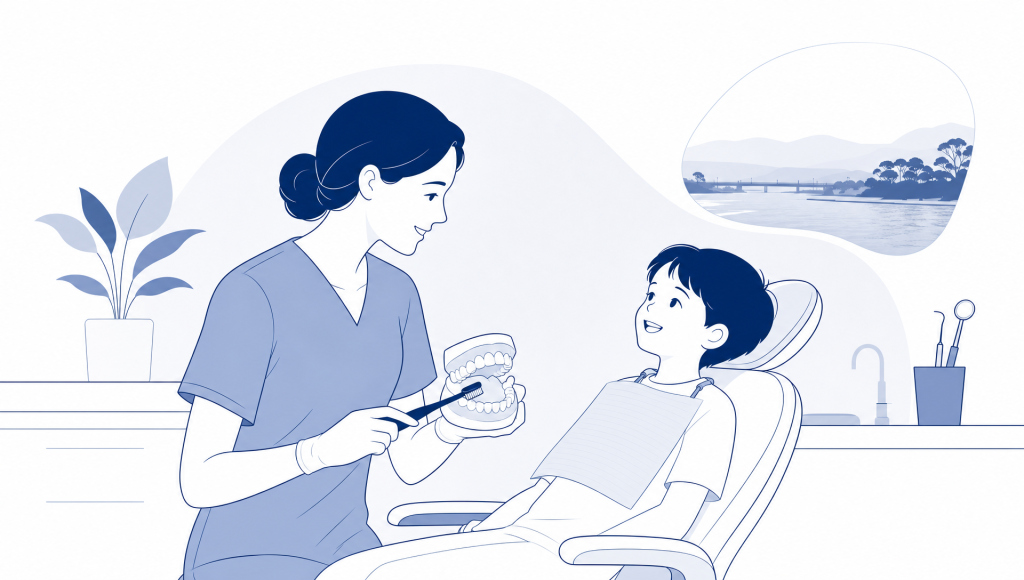
Preparing children for dental check-ups is less about giving a big speech and more about making dental care family life feel normal, calm and predictable. A good check-up gives your child a chance to become familiar with the dental setting, while your dentist can look at their teeth, gums, bite and everyday oral habits.
For families in Beenleigh, Eagleby, Mount Warren Park, Waterford, Loganholme and Bethania, a little preparation at home can make the appointment feel more manageable, especially if your child is young, shy, sensitive to new environments or has had an unhappy health experience before.
Why preparing children for dental check-ups matters
Children often take their cues from the adults around them. If dental visits are spoken about as routine health care, rather than as something scary or unusual, children are more likely to approach them with curiosity instead of worry.
Preparation also helps your dentist. A child who has some idea of what may happen can often follow simple instructions more easily, such as opening their mouth, sitting in the chair or letting the dentist count their teeth. That does not mean every visit will go smoothly, and it is very normal for children to need time, reassurance and breaks.
Early dental visits are not only about finding problems. They can also help families understand brushing technique, fluoride toothpaste use, diet habits, thumb sucking, dummy use, tooth grinding and how baby teeth are developing. The Australian Dental Association’s patient information site has parent-focused oral health information that can be useful when building age-appropriate habits at home.
If your child is very young, a first visit may be simple and brief. It may involve a look in the mouth, a chat with the parent or carer and time for the child to become familiar with the clinic. For another parent-friendly overview, this guide to what may happen at a child’s first dental appointment explains common parts of children’s dentistry, including check-ups, home care advice and preventive options.
Dental care family routines that make check-ups feel familiar
The most helpful preparation usually happens in small moments before the appointment, not in one serious conversation on the way there. Children tend to feel safer when they know what to expect and when the adults around them stay calm.
Start by making dental care part of normal family language. You might say that the dentist checks teeth to see how they are growing, just like a doctor checks other parts of the body. Avoid using dental visits as a threat after a missed brush or sugary snack, as this can create an unhelpful connection between the dentist and punishment.
For younger children, play can be useful. You can count their teeth with a toothbrush, let them practise opening wide in the mirror or read a simple book about going to the dentist. For older children, explain that they can ask questions and tell the dentist if they need a short break.
| Child’s age or stage | Helpful preparation | What to avoid |
|---|---|---|
| Toddlers and preschoolers | Use simple words, practise opening wide and keep explanations short | Long warnings or too many details |
| Early primary school children | Explain tooth counting, brushing checks and the chair moving | Promising exactly what will or will not happen |
| Older children and tweens | Invite questions and explain that the dentist will discuss any concerns | Making them feel embarrassed about their teeth |
| Anxious or sensory-sensitive children | Talk to the clinic before the visit about triggers and preferences | Forcing a full appointment if the child needs a slower approach |
If you have children at different ages, it can help to think about their needs separately. A toddler, a seven-year-old and a teenager may all attend the same family dental clinic, but they may need very different explanations. Beenleigh Dental has also covered broader oral health planning in this guide to family dental care at every age.
What to say before the appointment
Children do not need a detailed clinical explanation. They need honest, gentle and practical information.
You might say: The dentist will have a look at your teeth, count them and check how they are growing. You can ask questions, and we can let the dentist know if you need a rest.
Try to avoid saying things like it will not hurt. Even when a check-up is simple, children can experience new sensations differently. If you promise that nothing will feel uncomfortable, and then the child dislikes the mirror, light or water, they may feel surprised or lose trust. A more balanced phrase is: Some parts might feel strange because they are new, but you can tell us how you are going.
It is also worth avoiding words that sound frightening to a child, such as needle, drill or pull, unless they are genuinely relevant to the appointment and explained carefully by the dental team. For a routine check-up, those words are usually unnecessary.
What may happen at a child’s dental check-up
A children’s check-up is usually adapted to the child’s age, comfort level and oral health needs. The dentist may begin by talking with you about brushing, diet, medical history, any symptoms and any habits such as thumb sucking, dummy use or mouth breathing.
The dental examination may include looking at the teeth, gums, tongue, jaw development and bite. The dentist may check for signs of tooth decay, enamel wear, gum inflammation or crowding. If your child is old enough, the dentist may also show them areas that need more brushing attention.
Some children may have a clean or fluoride application if the dentist considers it appropriate. Fluoride is a mineral that can help strengthen tooth enamel and is used in different ways, including in toothpaste and professional applications. If you want to understand this topic in more detail, Beenleigh Dental has a patient guide on fluoride and tooth decay.
Dental X-rays are not needed for every child at every visit. If your dentist recommends an X-ray, they should explain why it may be useful, what information it may provide and whether it is appropriate for your child’s situation. Dental X-rays involve radiation, so they are generally considered only when the expected diagnostic benefit is appropriate.
How to support an anxious child
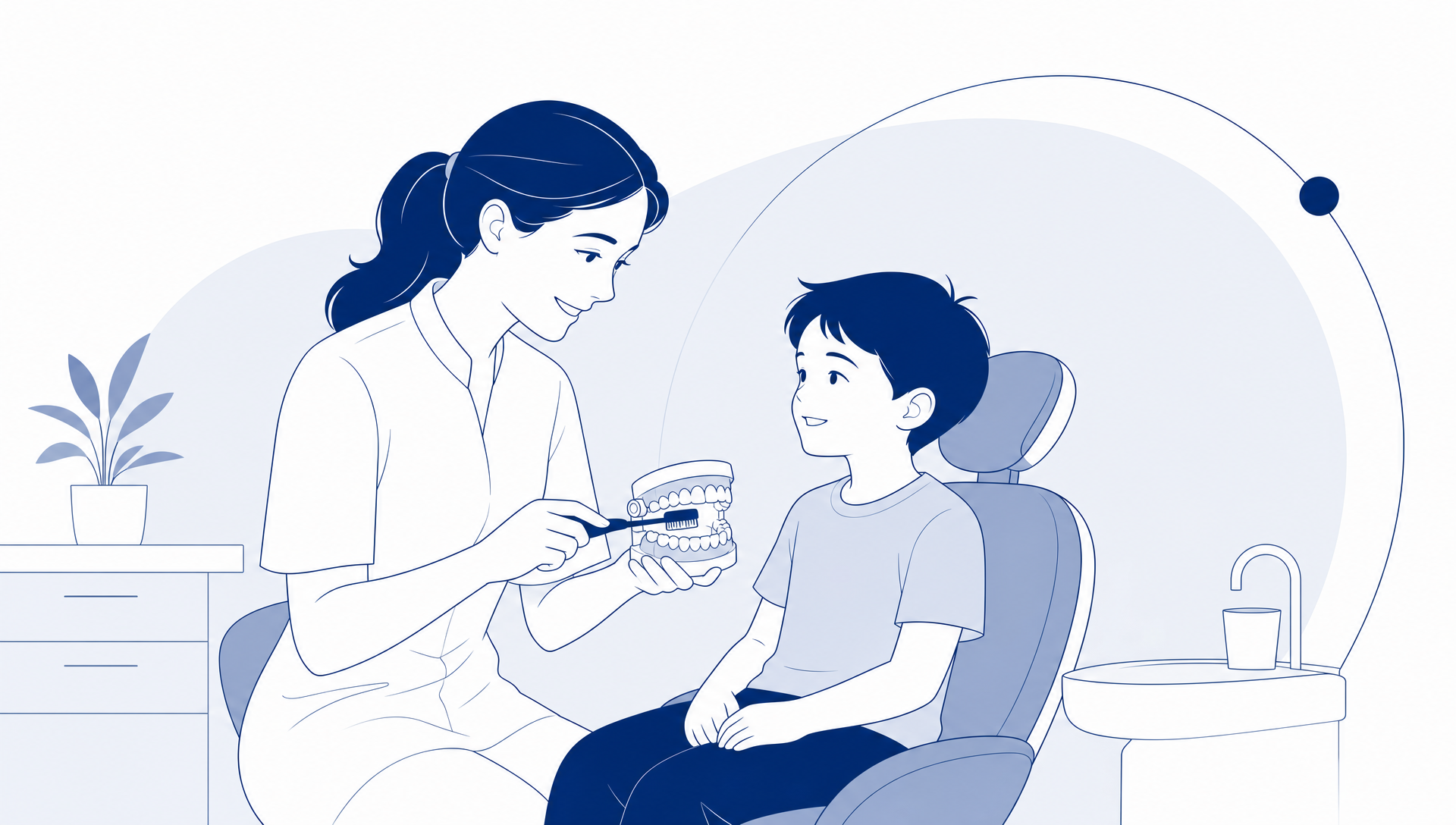
Dental anxiety in children can come from many places. Some children dislike unfamiliar rooms. Some are sensitive to sounds, lights, tastes or touch. Others may have heard worrying stories from adults or siblings. A child may also feel unsettled simply because they do not know what is expected of them.
If your child is anxious, tell the dental team before the appointment if possible. You can mention triggers, communication preferences, sensory needs, previous experiences and whether your child responds better to short explanations or demonstrations.
Practical supports may include bringing a comfort item, booking at a time of day when your child is usually settled, arriving a little early so they are not rushed and allowing extra time afterwards so the appointment does not feel like something squeezed into a stressful day.
It is also helpful to praise specific behaviours rather than the outcome. For example, you might say: You sat in the chair and let the dentist count some teeth. That was a helpful start. This supports gradual progress without suggesting the child has failed if they could not complete the whole appointment.
If treatment beyond a check-up is recommended, your dentist can explain options for managing comfort, anxiety and behaviour. Suitability depends on the child’s oral health, medical history, age, treatment needs and individual circumstances. Sedation or sleep dentistry is not part of a routine check-up, but it may be discussed in some cases where more involved treatment is being considered.
Building healthy habits between visits
Check-ups are only one part of children’s oral health. Daily habits at home usually have the biggest influence between appointments.
For most children, this means brushing twice a day with age-appropriate fluoride toothpaste, helping or supervising brushing until they have the coordination to do it well, limiting frequent sugary snacks and drinks, and encouraging water as the usual drink. Your dentist can give advice based on your child’s age, decay risk, enamel development and brushing habits.
Baby teeth matter, even though they eventually fall out. They help children chew, speak and hold space for adult teeth. Tooth decay in baby teeth can still cause discomfort, infection and difficulty eating, and may affect how a child feels about dental care.
As adult molars come through, your dentist may discuss fissure sealants. These are thin protective coatings placed in the grooves of some back teeth to help reduce food and plaque trapping in deep fissures. They are not suitable or necessary for every child, and your dentist can assess whether they may be appropriate. You can read more about fissure sealants for children’s molars if this has been mentioned at an appointment.
How parents and carers can prepare themselves
Children are not the only ones who benefit from preparation. Parents and carers can make the visit smoother by bringing useful information and thinking about questions beforehand.
Before the appointment, consider noting:
- Any toothache, sensitivity, swelling, bleeding gums or mouth injuries
- Current medications, allergies or medical conditions
- Feeding, snacking or drink habits that you would like advice about
- Brushing challenges, including toothpaste refusal or gagging
- Family history of dental concerns, if relevant
- Questions about costs, payment options or eligibility for government dental benefits
If cost is a concern, it is reasonable to ask about fees, item numbers and payment options before treatment is provided. Beenleigh Dental offers treatment consultations and payment plans, and the team can explain available options in relation to your child’s proposed care.
For families balancing school, work and sport across Beenleigh and the Logan area, online appointment booking can also make it easier to choose a time that suits your household routine.
When to book sooner than a routine check-up
Some concerns should be assessed sooner rather than waiting for the next planned visit. Arrange dental advice promptly if your child has facial swelling, a dental injury, a knocked-out adult tooth, severe toothache, a broken tooth causing discomfort, signs of infection, difficulty eating, or pain that wakes them at night.
If an adult tooth is knocked out, time can matter. Handle the tooth carefully by the crown, not the root, and seek urgent dental advice. If there is facial swelling, fever, difficulty breathing or difficulty swallowing, seek urgent medical care.
For less urgent concerns, such as mild sensitivity, slow eruption of teeth or brushing difficulties, a dental appointment can still help identify the cause and guide appropriate next steps. The right timing depends on your child’s symptoms and overall health.
Frequently Asked Questions
What age should my child first see a dentist? Many Australian parents are encouraged to arrange a first dental visit when the first tooth appears or by around 12 months of age. If your child is older and has not yet attended, it is still worthwhile to start with a gentle check-up.
How often should children have dental check-ups? The timing varies. Some children are reviewed every 6 to 12 months, while others may need a different schedule depending on tooth decay risk, oral hygiene, diet, medical history, orthodontic development and previous dental concerns.
What if my child refuses to open their mouth? This can happen, especially at a first visit. The appointment may still be useful because your child can meet the dentist, sit in the chair, observe a sibling or parent, or become familiar with the room. Your dentist can suggest a gradual approach.
Should I stay with my child during the check-up? In many cases, parents or carers stay with younger children. Older children may prefer some independence. The dentist can work with your family’s comfort level, the child’s age and what is appropriate for the appointment.
Will my child need treatment at the first check-up? Not necessarily. A first check-up may simply involve an examination and advice. If treatment is recommended, your dentist should explain the reason, possible benefits, risks, alternatives and costs before you decide how to proceed.
Discuss children’s dental check-ups in Beenleigh
Preparing children for dental visits does not need to be complicated. Calm language, simple practice at home and an appointment matched to your child’s age and needs can make the experience feel more familiar.
If you would like to discuss your child’s oral health, Beenleigh Dental can provide an assessment and explain options that may be appropriate. You can contact the clinic or use online booking to arrange an appointment in Beenleigh.