
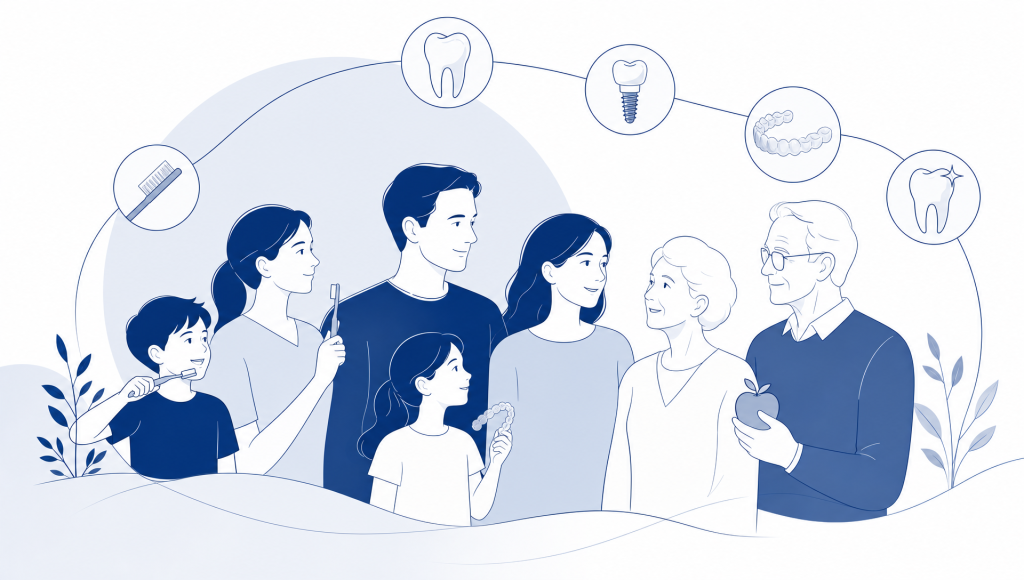
Family dental care is not a single routine that works forever. A toddler learning to brush, a teenager in clear aligners, a parent with a cracked filling and a grandparent adjusting to dentures all need different support, timing and advice.
The goal is the same at every age: prevent problems where possible, detect changes early and make treatment feel manageable. For busy families in Beenleigh, a practical plan can also reduce stress. When everyone understands what to do at home and when to book a visit, dental care becomes part of normal family life rather than something that only happens when pain appears.
Why family dental care should change with age
Teeth, gums, jaws and daily habits change constantly. Baby teeth make room for adult teeth. Teenagers often face orthodontic decisions, sports injuries and diet changes. Adults may notice worn fillings, gum inflammation or teeth grinding. Older adults may deal with dry mouth, dentures, implants or medical conditions that affect oral health.
Good family dental care takes these changes into account. It is not just about scheduling a check-up every now and then. It is about matching prevention, education and treatment to the stage of life each person is in.
A dentist may recommend different recall intervals depending on a person’s risk of decay, gum disease, medical history and previous dental work. Many people benefit from regular six-monthly visits, but some need more frequent reviews and others may be advised differently. Your dentist is the best person to tailor that timing.
| Life stage | Common dental priorities | Practical focus at home |
|---|---|---|
| Babies and toddlers | First teeth, teething, early decay prevention | Gentle cleaning, water as the main drink, first dental visits |
| Primary school children | Cavities, fissure protection, brushing skills | Supervised brushing, healthy snacks, sports mouthguards |
| Teenagers | Orthodontics, wisdom teeth, diet, mouthguards | Consistent routines, low-sugar drinks, aligner or brace hygiene |
| Adults | Gum health, fillings, cosmetic goals, tooth wear | Daily interdental cleaning, check-ups, stress and grinding awareness |
| Older adults | Dry mouth, dentures, implants, gum disease | Medication review, denture care, ongoing preventive visits |
Babies and toddlers: start before problems appear
The earliest stage of family dental care is about building comfort and preventing decay before it starts. Baby teeth may be temporary, but they help children chew, speak and guide adult teeth into position. Decay in baby teeth can cause pain, infection and difficulty eating.
Before teeth erupt, parents can gently wipe the gums with a clean, damp cloth. Once teeth appear, use a small, soft toothbrush. In Australia, Healthdirect Australia advises that children should have their first dental visit when their first tooth appears or by around 12 months of age.
Early visits are usually simple. They help a child become familiar with the dental setting, and they give parents a chance to ask about brushing, teething, dummies, thumb sucking and diet. These early conversations can prevent small habits from becoming bigger problems.
For toddlers, the biggest risks often come from frequent snacking, bottles at bedtime and sticky sweet foods. Water should be the main drink between meals. If your child resists brushing, keep the routine short, calm and consistent. Singing a song, brushing together or letting the child hold a second toothbrush can help make the habit feel less like a battle.
Primary school years: protect adult teeth as they arrive
Primary school is a crucial time because adult molars usually erupt at the back of the mouth before many children are skilled at brushing them properly. These molars have grooves that can trap food and plaque, which is why they are common sites for decay.
Children often need help or supervision with brushing until they have the coordination to do it thoroughly. As a guide, if a child still struggles to tie shoelaces neatly, they may also struggle to clean every surface of every tooth well. Parents can gradually give children more independence while still checking the result.
This is also the stage when fissure sealants may be discussed. Sealants are thin protective coatings placed in the grooves of back teeth to help reduce the chance of decay in hard-to-clean areas. If your child has deep grooves or a higher decay risk, it may be worth learning more about what fissure sealants are and when they can help.
Sport is another consideration. Custom mouthguards are often recommended for contact sports and activities with a risk of knocks to the face. A properly fitted mouthguard can help protect teeth, lips and jaws, and it is usually more comfortable than a boil-and-bite option.
Teenagers: support independence without dropping the routine
Teenagers often know what they should do, but busy schedules, late nights, sport, study and social habits can get in the way. This stage of family dental care is about helping teens take ownership without assuming they no longer need reminders.
Diet can become a bigger issue in the teenage years. Energy drinks, soft drinks, sports drinks and frequent snacking increase acid and sugar exposure. The World Health Organization recommends reducing free sugars for better overall health, and this also supports lower tooth decay risk. Even when sugar intake is moderate, sipping sweet or acidic drinks over several hours can be particularly harmful because teeth are exposed again and again.
Orthodontic care may also become relevant. Some teens need braces or clear aligners to improve alignment, bite function or confidence. If clear aligners are being considered, hygiene and compliance matter. Aligners must be worn as instructed, removed for eating and drinking anything other than water, and cleaned properly.
Wisdom teeth may begin to be monitored in the later teen years. Not every wisdom tooth needs removal, but a dentist can assess whether there is enough space, whether teeth are erupting at an angle and whether they are causing pain, infection or crowding concerns.
Adults: prevention, repair and long-term function
For adults, dental care often becomes easier to postpone because work, parenting and other responsibilities take priority. Unfortunately, small dental issues rarely become simpler with time. A tiny chip can become a cracked tooth. Mild gum bleeding can progress. A worn filling can allow decay to develop underneath.
Adult family dental care should focus on maintaining teeth for the long term. That includes brushing twice daily with fluoride toothpaste, cleaning between teeth, keeping regular dental visits and addressing problems early. The Australian Dental Association’s consumer oral health resource provides practical guidance on daily habits that support oral health.
Gum health deserves special attention. Bleeding when brushing, persistent bad breath, gum recession and loose teeth can all be signs that gums need assessment. Gum disease is not only a mouth issue. Research continues to explore its relationship with broader health, and you can read more about the connection between gum disease and heart disease.
Adults may also seek cosmetic or restorative treatment. Teeth whitening, veneers, crowns, dental implants and dentures all have different purposes, benefits and maintenance needs. A consultation is the right time to discuss what is suitable, what the treatment involves and what ongoing care will be required.
Pregnancy is another important adult life stage. Hormonal changes can make gums more prone to inflammation, and morning sickness can expose teeth to stomach acid. If vomiting occurs, rinse with water and wait before brushing to avoid scrubbing softened enamel. Dental care during pregnancy is generally considered important, but always tell your dentist if you are pregnant or planning pregnancy so your care can be tailored.

Older adults: comfort, function and medical changes
Dental needs do not stop with age. In fact, older adults often benefit from consistent preventive care because medical conditions, medications and previous dental treatment can increase oral health risks.
Dry mouth is a common issue and can be linked with some medications or health conditions. Saliva helps protect teeth by washing away food particles and neutralising acids. When saliva is reduced, decay can develop more quickly, especially around older fillings, crowns and exposed root surfaces.
Dentures need ongoing care too. They should fit comfortably, allow clear speech and support chewing. A denture that rubs, feels loose or causes ulcers should be reviewed. Even people with full dentures still benefit from oral checks because the gums, tongue, cheeks and jaw tissues need monitoring.
Dental implants also require maintenance. Although implants cannot decay like natural teeth, the gums and bone around them need to stay healthy. Regular professional reviews help identify inflammation, bite issues or cleaning difficulties early.
For older family members, it is helpful to bring an up-to-date medication list to dental appointments. Medical history can affect treatment planning, healing, bleeding risk and dry mouth management.
A simple family system that makes dental care easier
The best routine is one your household can actually maintain. Rather than aiming for perfection, create small systems that reduce decision fatigue and make oral care visible.
Keep toothbrushes, toothpaste and floss or interdental brushes easy to reach. Put replacement toothbrushes on the shopping list every three months, or sooner after illness or when bristles fray. Set recurring calendar reminders for check-ups. If a family member is anxious, tell the clinic before the appointment so the team can discuss ways to make the visit easier.
Helpful family habits include:
- Brush at the same time as younger children so they can copy your technique.
- Keep water as the default drink between meals.
- Pack tooth-friendly snacks such as cheese, yoghurt, fruit or vegetable sticks more often than sticky sweet foods.
- Use a custom mouthguard for contact sport or activities with facial injury risk.
- Store dental information, treatment plans and appointment reminders in one shared place.
- Book promptly for toothache, swelling, trauma, broken teeth or lost fillings.
If cost is a concern, ask about treatment priorities and payment options before delaying care. Some Australian children may be eligible for the Child Dental Benefits Schedule, which families can check through Services Australia. Local clinics may also offer payment plans or staged treatment discussions to help families plan care more comfortably.
When should each family member book a dental visit?
There is no universal schedule that suits every person, but the table below gives a practical starting point. Your dentist may adjust recommendations based on risk, symptoms and treatment history.
| Situation | When to book | Why it matters |
|---|---|---|
| Routine check-up | Commonly every 6 to 12 months, or as advised | Detects decay, gum issues and wear before they become harder to treat |
| Child’s first visit | When the first tooth appears or by around 12 months | Builds familiarity and gives parents early prevention advice |
| Toothache or swelling | As soon as possible | Pain and swelling can signal infection or nerve involvement |
| Knocked-out adult tooth | Immediately | Fast action can improve the chance of saving the tooth |
| Broken tooth or lost filling | Promptly, especially if sharp or painful | Prevents further breakage, sensitivity or decay |
| Denture discomfort | When rubbing, looseness or ulcers appear | Improves comfort and reduces soft tissue irritation |
| Clear aligner or orthodontic concern | When aligners do not fit, are lost or cause unexpected pain | Keeps treatment on track and prevents delays |
Choosing a family dentist in Beenleigh
A good family dentist should be able to support different ages, needs and comfort levels. For one household, that may mean children’s check-ups and fissure sealants. For another, it may mean emergency care, clear aligners, implants, dentures or cosmetic dentistry.
Look for a clinic that explains options clearly, welcomes questions and helps you understand priorities. If several family members need care, ask how treatment planning can be organised so urgent issues are addressed first and preventive appointments are not forgotten.
Anxious patients should also feel comfortable raising concerns. Dental anxiety is common, and avoiding visits often makes problems worse. Options such as gentle communication, breaks during treatment, treatment consultations and sedation discussions can make care feel more manageable for some patients.
Frequently Asked Questions
How often should my family visit the dentist? Many people attend every six months, but the right interval depends on age, decay risk, gum health, medical history and previous dental treatment. Your dentist may recommend a shorter or longer interval after assessing each person.
When should my child have their first dental appointment? A child should generally have a first dental visit when the first tooth appears or by around 12 months of age. Early visits are usually simple and focused on prevention, comfort and parent guidance.
Can one dental clinic care for children, adults and older family members? Yes, a family dental clinic can often support multiple generations, including children’s dentistry, preventive care, restorative treatment, dentures, implants and emergency appointments. The key is making sure each person receives age-appropriate advice.
What should I do if my child is scared of the dentist? Keep language positive, avoid describing treatment in frightening terms and consider booking a simple introductory visit. Tell the dental team about the anxiety beforehand so they can take a calm, gradual approach.
What counts as a dental emergency? Severe toothache, facial swelling, dental trauma, a knocked-out adult tooth, uncontrolled bleeding, a broken tooth with pain or signs of infection should be treated as urgent. If you are unsure, call a dental clinic for advice.
Ready to plan family dental care in Beenleigh?
Family dental care is easier when you have a local team that can support prevention, treatment planning and urgent needs as your household changes. Beenleigh Dental welcomes new patients and offers family, children’s, emergency, cosmetic, restorative and major dentistry, along with options such as clear aligners, dental implants, dentures, sleep dentistry sedation, treatment consultations, online booking and payment plans.
If it has been a while since your family’s last check-up, or if someone has pain, anxiety or a treatment question, booking a consultation is a practical first step. A personalised plan can help every member of the family protect their smile at the right stage of life.